Plantar Wart
A plantar wart is a benign but painful viral lesion that develops on the sole of the foot. Your podiatrist offers targeted and effective treatment to eliminate the wart and provide lasting relief.
Book an appointment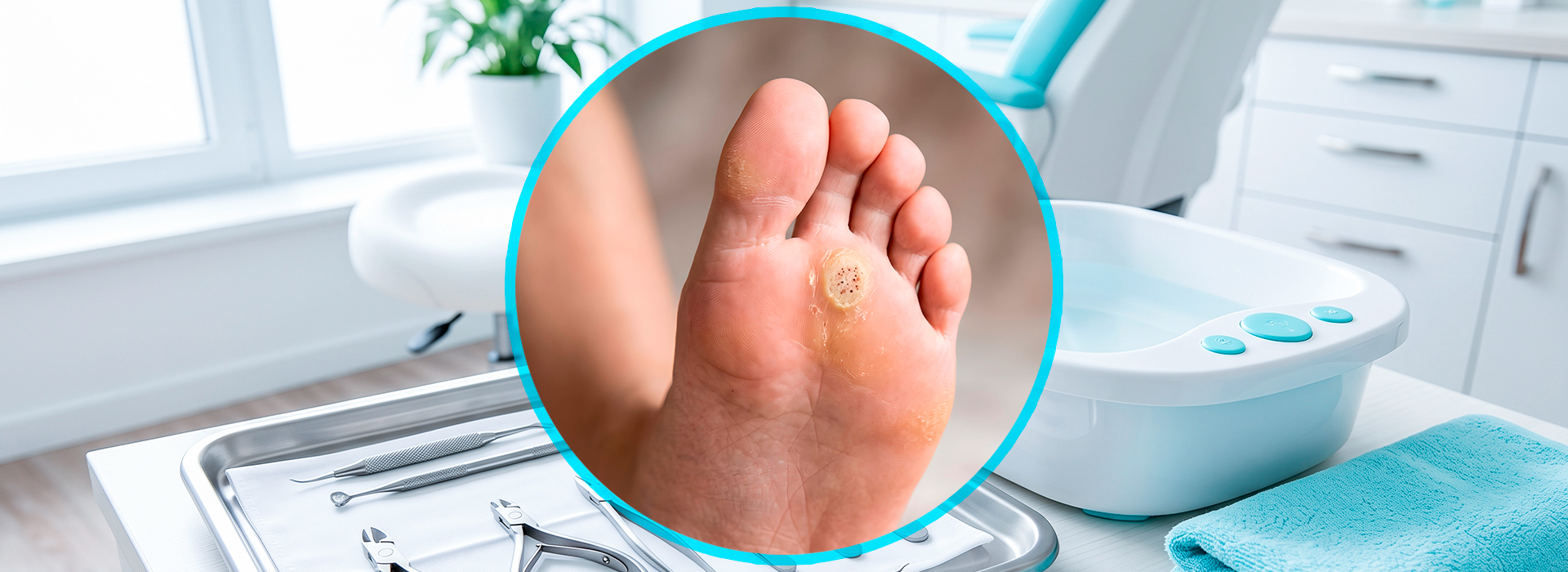
What is a Plantar Wart?
A plantar wart, or verruca plantaris, is a benign skin lesion caused by the human papillomavirus (HPV). It develops on the sole of the foot, particularly under pressure areas such as the heel and forefoot. Due to the weight of the body, the wart grows inward into the deeper layers of the skin rather than protruding outward, making it particularly painful when walking.
There are two main forms:
- Single wart (myrmecia): deep, well-defined, with a cauliflower-like appearance and characteristic black dots (thrombosed capillaries)
- Mosaic wart: a cluster of small, superficial warts grouped over a large area of the sole
Causes and Risk Factors
- HPV infection transmitted through direct contact with a contaminated surface
- Walking barefoot in wet public areas (swimming pools, locker rooms, showers)
- Weakened immune system making the body less resistant to the virus
- Dry, cracked, or broken skin facilitating viral penetration
- Direct contact with a wart on one's own skin or another person's
- Children and teenagers particularly vulnerable due to less developed immunity
Symptoms
- Thickened, rough area on the sole of the foot, often confused with a corn or callus
- Small black dots visible on the surface (thrombosed blood capillaries)
- Sharp pain under direct pressure or when walking
- Interruption of skin lines (dermatoglyphs) at the lesion site
- Slight bleeding if the surface is scratched or injured
- Possible spread to other areas of the foot or to other people
Podiatric Treatment
Your podiatrist at Clinique Claire Fontaine selects the most appropriate treatment method based on the size, depth, and number of warts:
- Cryotherapy: application of liquid nitrogen to destroy infected tissue through freezing — a fast and effective treatment for superficial warts
- Concentrated salicylic acid: repeated topical application to progressively break down the lesion in depth
- Podiatric curettage: mechanical removal of the wart after softening, under local anaesthesia if necessary
- Trichloroacetic acid (TCA): a caustic agent applied directly to the lesion for targeted chemical destruction
- Hygiene and prevention advice to avoid spreading the virus to other areas or to others
Prevention
To reduce the risk of contracting or spreading a plantar wart, it is recommended to wear sandals in wet public spaces, avoid touching or scratching existing warts, thoroughly dry feet after bathing or showering, refrain from sharing towels, socks, or shoes, and consult your podiatrist promptly at the first sign of any suspicious lesion on the sole of the foot.
Need this treatment?
Our specialists are available to help you.
Find us
11988 Av. Salk, Montréal, QC H1G 4Z2